
NYC A Crisis of Affordability
New York City is living through its worst housing affordability crisis in a century. While the City and State distribute billions of dollars in housing subsidies each year, maintain the most robust rent-stabilization program in the nation and sustain a public housing system that is home to a population larger than many cities, almost all of the personal outcomes associated with housing here in NYC are terrible.
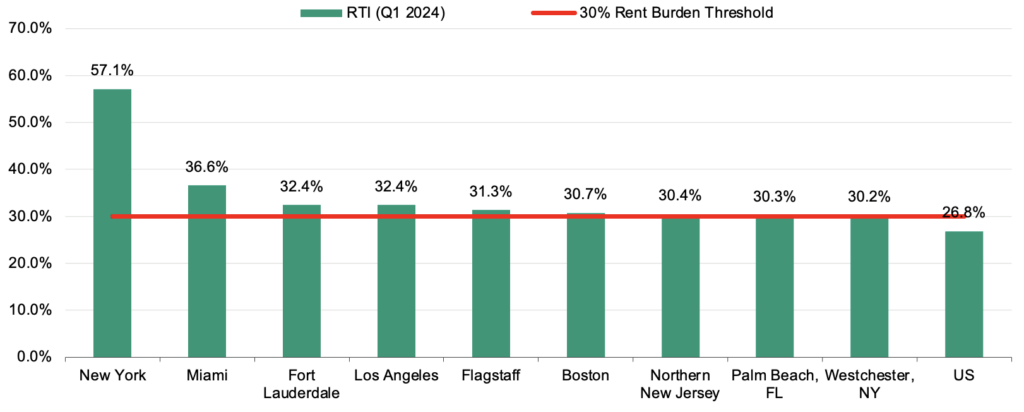
Around 86,000 New Yorkers stayed in a City-run shelter on a typical night in October 2025. The median New York renter spent 41% of their income on rent last year. The share of renters who are rent burdened has increased from 40 percent to 50 percent in 2022. The share of renters who are severely burdened increased from 1 in 5 to 1 in 4. At least half of renters are currently rent burdened in 68 of the 100 largest cities in the US. Rent burden occurs when a household spends more than 30% of its gross income on rent, a common benchmark, the "30% rule" recommending capping housing costs at this level.
Black and Latinx women renters are most likely to be rent burdened among all other race and gender groups identified by the census.
Rent Burden in NYC
New York City is the number one rent-burdened city in the USA. 57% of all New York renters pay more than 30% of their monthly gross income for rent. Affordable housing is the number one cost burden affecting all families. HUD defines cost-burdened families as those “who pay more than 30 percent of their income for housing” and “may have difficulty affording necessities such as food, clothing, transportation, and medical care.”
Widespread Issue: More than half of New York City's residents are rent-burdened, meaning they spend over 50% of their income on housing. Escalating Problem: The situation is described as "worse than it's ever been," with rents up significantly since the start of the pandemic. High Median Rent: In 2023, the median asking rent for available apartments in NYC was $3,500 per month.
NYC's Community Opportunity to Purchase Act (COPA) gives qualified non-profits and community groups the first chance to buy certain multi-family buildings (3+ units) before private sales, requiring owners to give 180 days' notice to the city's Housing Preservation & Development (HPD) and wait for designated groups to act, ensuring affordability and community control, with rules involving certified "Qualified Entities" and timelines for offers.
There is a growing concern that federal housing assistance programs are insufficient to meet the needs of low-income households. Only a fraction of eligible renters receive assistance, leaving many without support.
NYC Communities Opportunity to Purchase Act 2027
